
The Treehouse surfboard shaper - David Porter is crafting the 'self-made surfer"
Original Article By Ben Langford
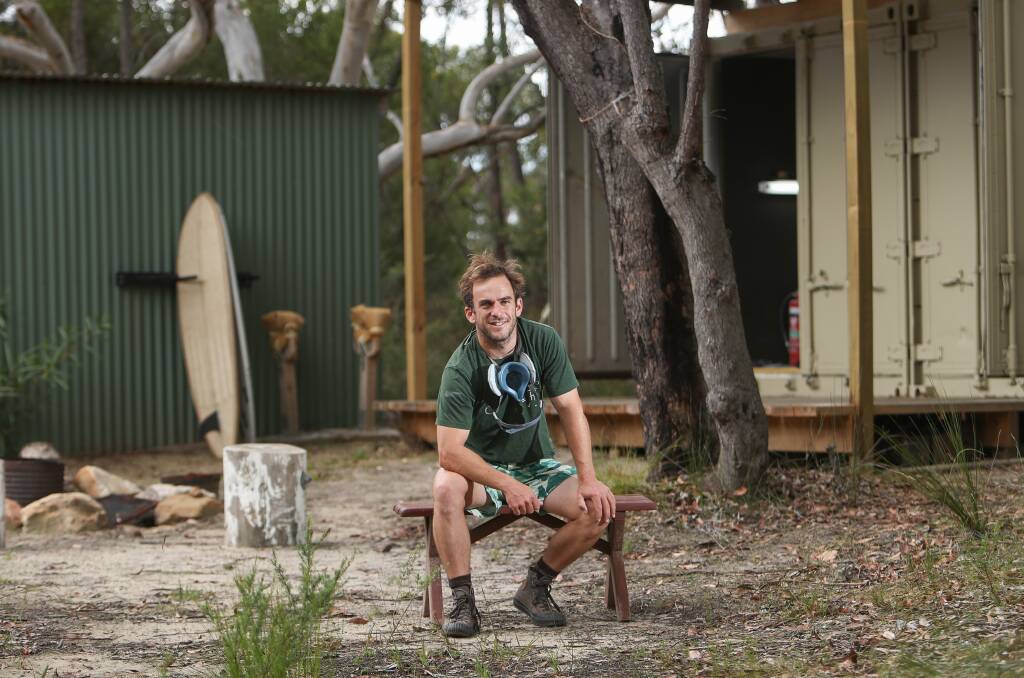
BUSH BREAK: David Porter in situ - at his Treehouse surfboard workshop, and retreat camp, outside Helensburgh.
You know the lucky ones for whom business and pleasure intersect?
David Porter’s Treehouse surfboard workshop is set up to share his vision of surfing as a more environmentally friendly pursuit, in touch with its roots. And shaping your own board is a good place to start.
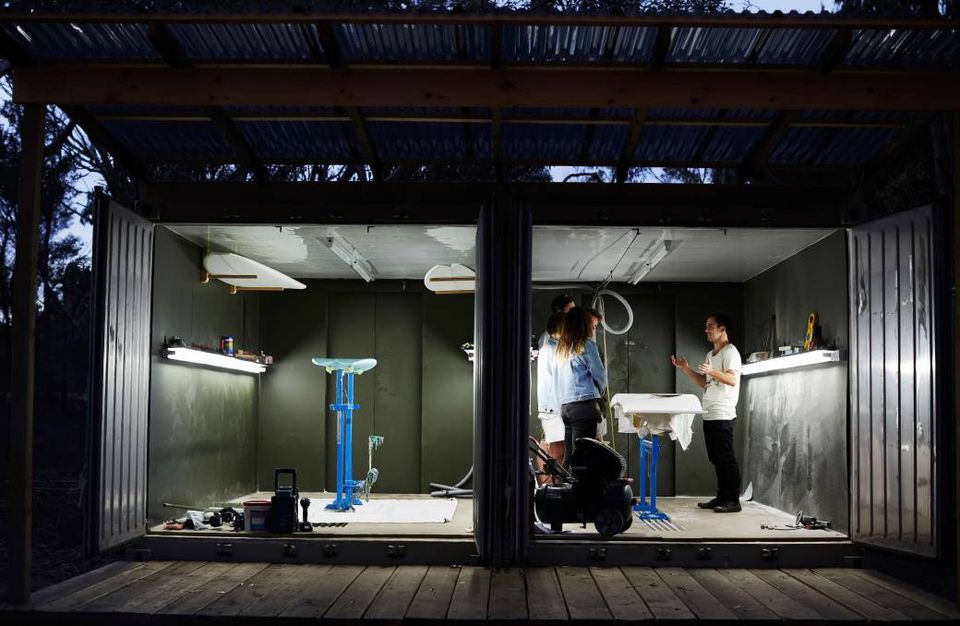
Porter hosts customers from around the country at his board studio in Helensburgh, where he offers four-day shaping retreats in the bush, with the goal of producing boards as sustainably as possible.
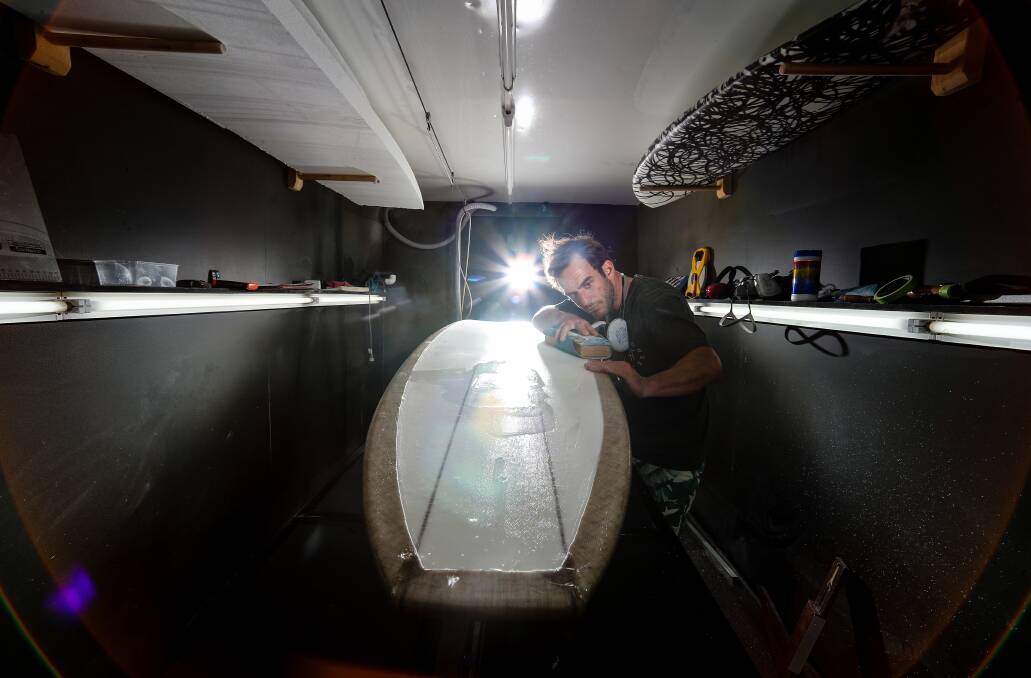
MEANS OF PRODUCTION: David Porter at work shaping one of his Treehouse shapes in his Helensburgh workshop. Picture: ADAM McLEAN
And perhaps surprisingly for sport which is as close to nature as surfing, the process of turning the industry on to more ocean-friendly materials has been a long one.
Most surfboards use polyurethane foam and polyester resin, as well as fibreglass cloth – WW2-era technology.
“Boards have been being made with those same materials so they’ve been around for a long time – the problem with those materials is that the resin and catalyst are fairly toxic … and the polyurethane foam is not recyclable,” Porter said.
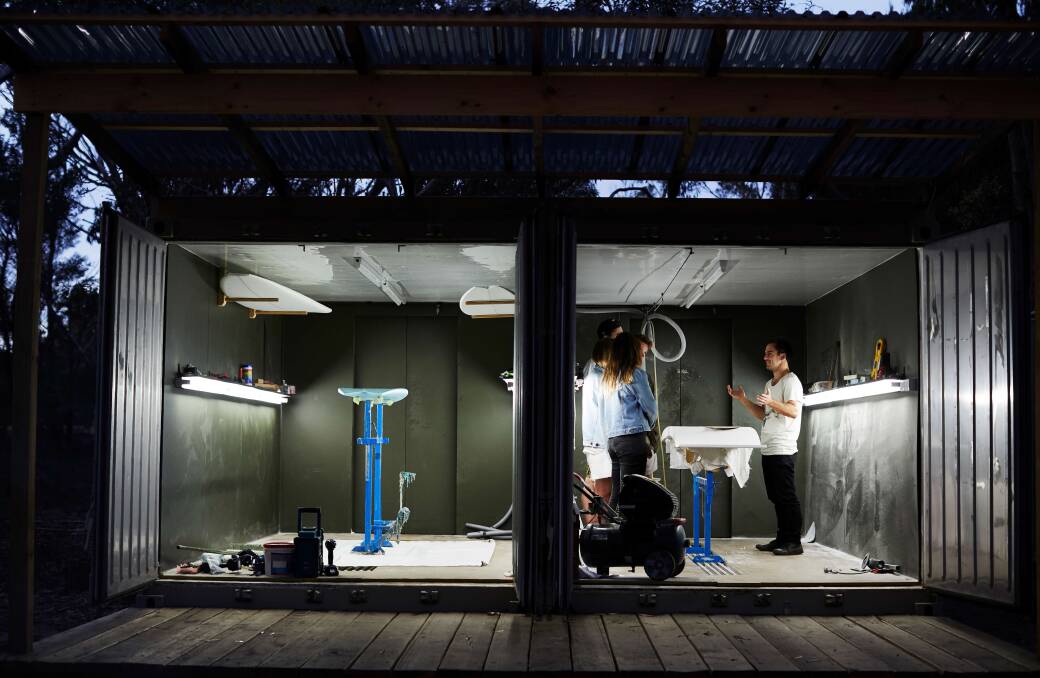
NIGHT WORKS: Porter's workshop lit up while the customer and their work goes on into the evening.
“I’ve always endeavoured to look for better options, and at the moment the materials I’m using are the best option that I can use commercially.”
He uses recyclable foam expanded with steam rather than Toluene diisocyanate, and an outer resin with 30 per cent pine sap. He also uses a flax-based cloth in place of some of the fibreglass on a lot of the boards.
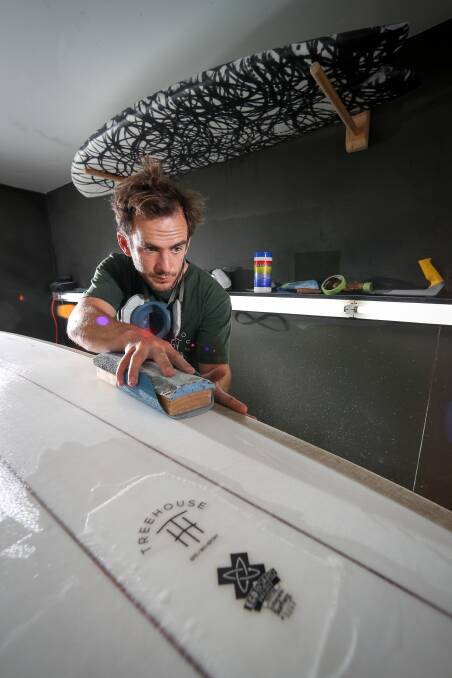
Porter appreciates the hole in the market for him to fill, but admits he finds the mainstream of board making a creaky old wheel to turn.
“The market is really slow to adapt anything new,” he said. “Granted, if you want to get surfers on board … they are influenced by board performance and the perception of board performance. The professional surfing circuit and the big companies that market the boards have a lot to answer for in that sense.
“The more sustainable material options have been here for a long time and some of the big brands are starting to jump on now.
“But in a market where I initially expected surfers to be quite quick to adopt more sustainable materials, the opposite has actually been the case.”
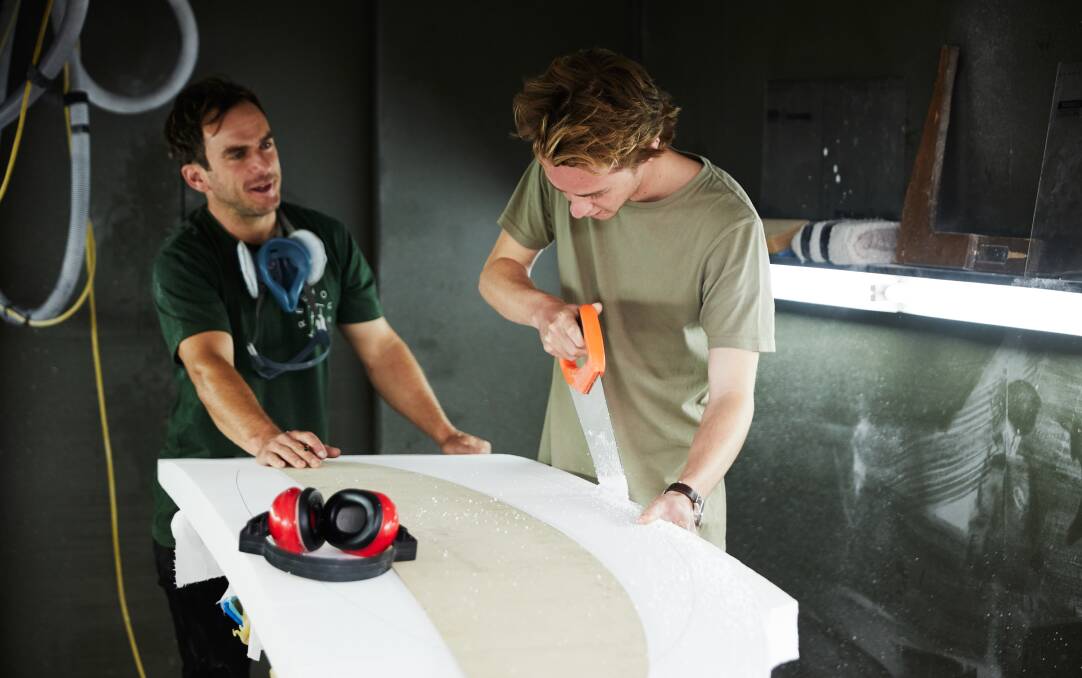
SELF-MADE SURFING: Ryan North in the process of shaping his surfboard, assisted by Porter (left).
Porter moved to his bush site from his previous workshop at Bulli earlier this year, which means retreaters can “switch off” among the trees while materials set.
Porter’s ideal is something he calls “self-made surfing”.
“Surfing is not just about riding a wave but a whole process of creating the board and understanding what you’re riding,” Porter said.
“You get a better experience – that experience of shaping the board actually comes through when you’re surfing it, and it makes surfing more enjoyable.
“You do get a board more suited to yourself when you’re involved in the process of making it.”
SUMMARY
We hope to create a similar experience for fathers, sons, daughters and even families. Our intention is to get our kids off technology and back into nature, learning a skill for life and hand crafting a surfboard that will take them on adventures and create meaningful experiences over their lifespan. Perhaps even create a momento that our kids can hang in their pool room one day. Reminding them of a life fully lived.